Meet Asale
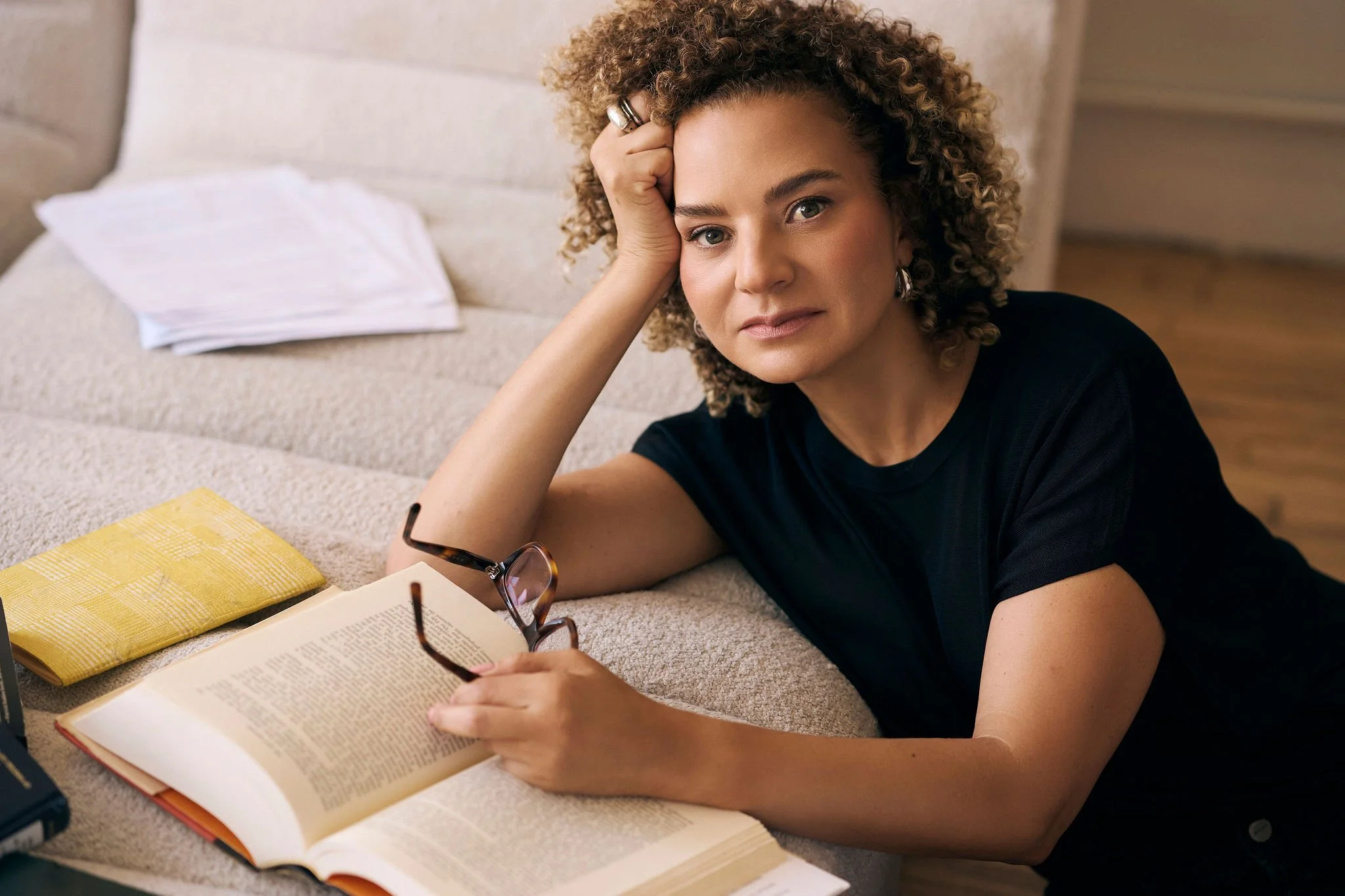
I am a writer, teacher, and storyteller obsessed with the lives that history overlooks — the women at the edges, the families whose stories get buried, the communities that survive against every odd. My books move across genres — memoir, ethnography, fiction — because the truth, in my experience, rarely fits into a single form. I came into writing the long way around. I was born into silence — not metaphorically, but literally.
My identical twin sister and I grew up in a household where our teenage mother, worn down by poverty and violence, demanded quiet so she could lose herself in books. So my sister and I invented our own gestural language, a private world between two people. Professionals were called. Tests were ordered. What they found was that we could read for hours, mute but locked in books above our grade level. It was, in its strange way, the beginning of everything.
My parents privately thought of themselves as poets and painters, but were publicly a construction worker/drug dealer and a nurse's aide/welfare recipient. For a long time I lived with the idea that people like us could never be more than a "servant of the hours," as Mary Oliver once wrote. So it is with a sense of wonder and occasional disbelief that today I call myself a writer.
Zora Neale Hurston was among my favorite writers growing up, and I naively believed that the way to become a "real" writer was to become an anthropologist, like her. So I did. Despite its racist and colonial foundations, anthropology gave me something invaluable — a way of excavating meaning buried in untold histories, and a way of listening carefully to people and ideas that live at the margins but speak far beyond them. Getting a PhD from Stanford University wasn't fun. I wanted to write, but not the senseless academic gibberish that I was being shown as a model. I was told over and over again that I "couldn't write" and might have established a record for the most rejected dissertation (at least three times) before it was finally accepted by my committee. I could say more about this, but I won't. But once I left, I did not look back. Instead I went on to teach at the University of Texas at Austin, NYU's Gallatin School, and Hong Kong Baptist University, where I watched my students make history during the Umbrella Revolution, paralyzing the heart of Asia's financial center in their struggle for democracy.
My first book, Strange Trade: The Story of Two Women Who Risked Everything in the International Drug Trade (Seal Press, 2010), grew out of my research on the criminalization of African migrant women in Italy and my own experience as the daughter of formerly incarcerated parents. To conduct the interviews on which it is based, I worked inside Rome's Rebibbia Femminile — the largest female prison in Europe — becoming the first American and the first Black woman granted permission to conduct extensive interviews with foreign inmates. Strange Trade was named the best nonfiction book of its year by Ms. Magazine and Carte Blanche, and was translated and published in France.
My novel A Country You Can Leave (Farrar, Straus and Giroux/MCD, 2023) is a family story centering on a biracial Afro-Cuban girl and her Russian mother trying to survive in the California desert. The New York Times called it "a masterclass of bildungsroman." It was a New York Times Recommended Book, an Amazon Editors' Fiction Pick, and a Women's National Book Association Great Group Read selection.
My most recent book, Fugitive Archives (Algonquin, 2026), is a memoir and social history of the rarely acknowledged intimacies at the core of our national identity, and the racial violence that has shaped them. Through my own family's bloodline, I trace the broader cultural history of the American promise and her betrayals — from Revolutionary War heroes who fought alongside Washington, to African ancestors who lived enslaved, to my great-grandmother's membership in the KKK and my grandmother's imprisonment in a Japanese internment camp.
I am currently at work on Starlings in Winter, a sweeping historical novel about three African American women at the center of the Russian Revolution. I live and write in New York City.